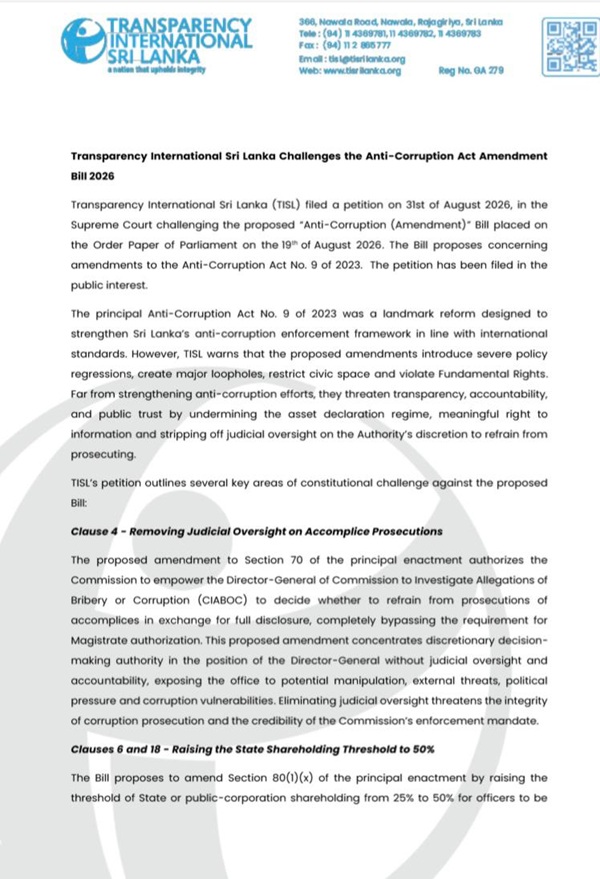


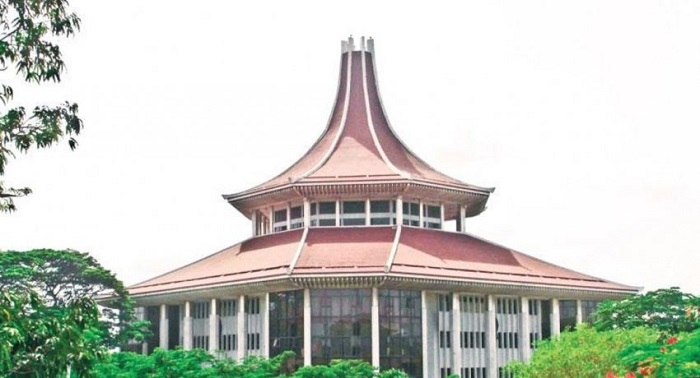
Transparency International Sri Lanka (TISL) has filed a petition in the Supreme Court challenging the proposed Anti‑Corruption (Amendment) Bill 2026, warning that the changes represent a major policy regression and undermine constitutional safeguards.
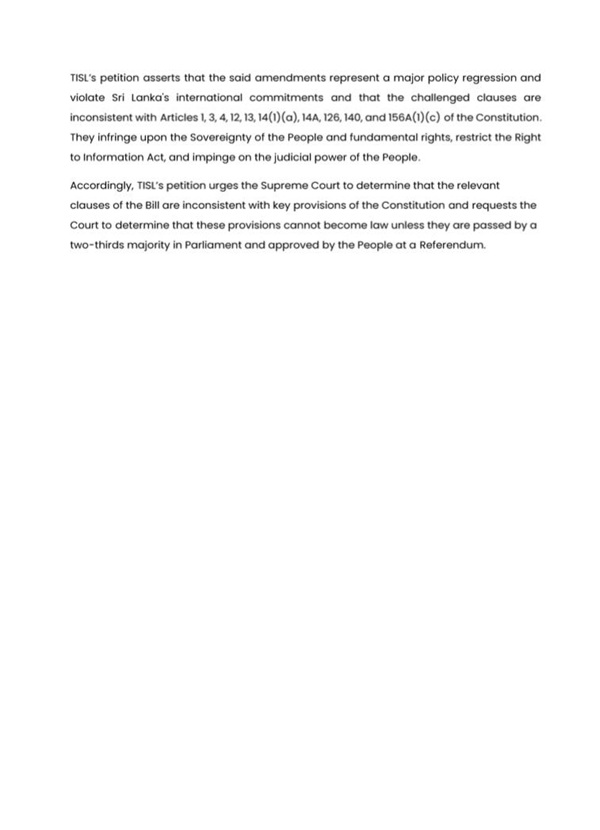
The petition, lodged on August 31, argues that several clauses of the Bill are inconsistent with Articles 1, 3, 4, 12, 13, 14(1)(a), 14A, 126, 140, and 156A(1)(c) of the Constitution.
TISL contends that the amendments infringe on the sovereignty of the people, restrict the Right to Information Act, and impinge on judicial power.
Among the most contentious provisions:
- Clause 4 removes judicial oversight on accomplice prosecutions, allowing the Director‑General of CIABOC to decide whether to refrain from prosecuting accomplices without magistrate authorization.
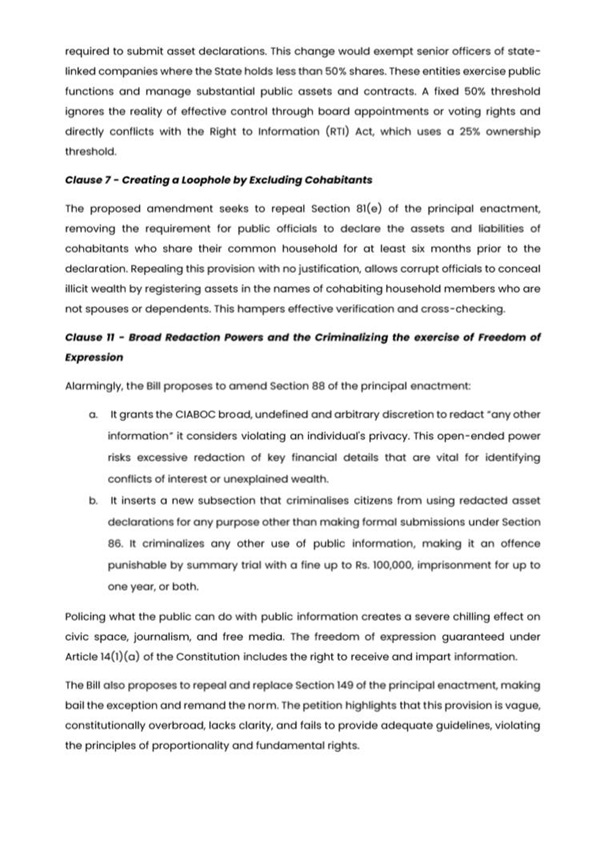
- Clauses 6 and 18 raise the threshold of state shareholding from 25% to 50%, exempting many state‑linked companies from asset declaration requirements despite their control over public assets.
- Clause 7 repeals the requirement to declare assets of cohabitants, creating loopholes for concealing illicit wealth.
- Clause 11 grants CIABOC broad redaction powers and criminalises the use of redacted asset declarations beyond formal submissions, punishable by fines or imprisonment.
TISL warns that these changes would severely restrict civic space, journalism, and free media, creating a chilling effect on freedom of expression guaranteed under Article 14(1)(a).
The petition also challenges provisions making bail the exception and remand the norm, arguing they are vague, overbroad, and violate proportionality principles.
TISL has urged the Supreme Court to determine that the contested clauses cannot become law unless passed by a two‑thirds majority in Parliament and approved by the people at a referendum. (Newswire)